
Learn Italian With AI Voice Tutoring (September 2026)

If you've tried learning Italian with an app and hit a wall, there's a good chance the app was working fine. The issue is that reading a word and producing it under pressure are two different cognitive tasks, and most tools only train one of them. Here's how to build the skill the apps miss.
TLDR:
- Italian sits in the FSI's easiest tier for English speakers, but reading fluency and speaking fluency are separate skills that don't transfer automatically, per Swain's Output Hypothesis (1985)
- Gamified apps build early vocabulary but train recognition, not recall; you can finish a full lesson without producing a single spontaneous sentence
- A 2024 review in Computers and Education: Artificial Intelligence found AI-driven speaking practice reduces foreign language anxiety and increases output volume, both of which predict faster fluency gains
- Daily 15-minute sessions build automaticity faster than weekly 90-minute blocks, because language memory consolidates between practice sessions
- ISSEN is a real-time AI voice tutor that adjusts difficulty turn by turn, ties SRS flashcards to your actual conversation history, and runs from a locked screen during a walk or commute, starting at $20 USD per month
Why Italian Is One of the Most Accessible Languages for English Speakers
The Foreign Service Institute places Italian in Category I, its easiest tier for English speakers, estimating 552 to 690 classroom hours to reach professional working proficiency. That figure assumes intensive, structured study, so for most adults learning part-time, the real timeline runs longer.
Three things drive that accessibility:
- Italian is phonetically regular, meaning words are pronounced as they are written, with almost no exceptions.
- English carries thousands of Latin-root words, so a meaningful slice of Italian vocabulary will already feel familiar before you open a textbook.
- Italian verb conjugation follows consistent patterns that reward deliberate practice, even if internalizing them takes real work.
Grammar still requires hours of spoken output to stick, and textbooks alone won't get you there. But compared to languages that are harder for English speakers, where the writing system, tonal system, and vocabulary all require rebuilding from scratch, Italian gives English speakers a genuine head start.
Where Most Italian Learners Get Stuck
Reading Italian and speaking it are different skills, and most learners find out the hard way. After a few months of study, you can follow a podcast, parse a menu, catch the gist of a conversation. Then a native speaker speaks to you directly and your mind goes quiet.
This is the intermediate plateau. Reading and listening train recognition; speaking requires recall. Pulling a word mid-sentence while managing pronunciation, grammar, and the social pressure of a live exchange is a different cognitive task entirely. Swain's Output Hypothesis (1985) identifies this precisely: producing language forces you to notice gaps that comprehension alone never surfaces.
Most learners plateau here because their study methods are input-heavy by default. Apps and textbooks build receptive skills well, but for adults learning a new language, spoken output reps are much harder to accumulate without a conversation partner who will actually talk back.
How AI Changes the Practice Equation for Italian Learners
The central access problem in Italian speaking practice has always been finding a willing partner at the right moment, at the right level, who won't mind if you butcher the subjunctive. Human tutors solve this, but they require scheduling and cost roughly $20 to $40 per session. Friends who speak Italian are rarer still.
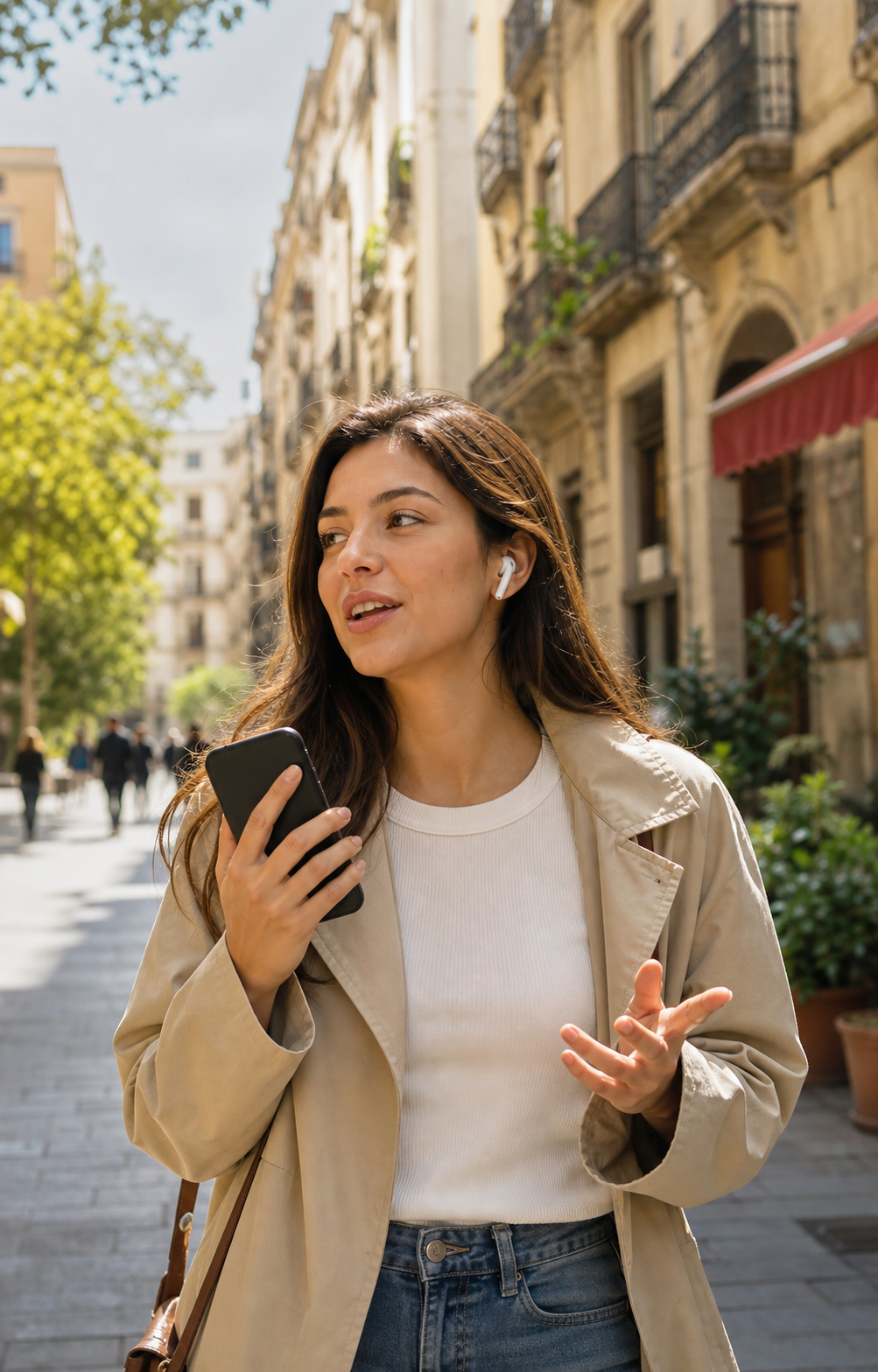
AI conversation tutors change the math by being available the moment you open the app. More consequentially, they hold difficulty at the precise level Krashen's Input Hypothesis calls i+1: one step beyond your current level, enough to challenge acquisition without triggering the shutdown that comes from hearing native-speed idiom soup. That calibration happens turn by turn, not as a one-time placement test.
A 2024 Computers and Education: AI review found that AI speaking practice reduces foreign language anxiety and improves speaking confidence and engagement, both of which support faster fluency gains. Lower anxiety means more reps, and more reps means faster automatization.
The structural shift is access. AI tutors don't replace the total hours Italian requires, and they won't replicate the unpredictability of a real native speaker. What they remove is the bottleneck of finding a conversation partner every single day.
AI vs. Apps vs. Human Tutors: What Actually Builds Speaking Fluency
Category | What it does well | Where it falls short for speaking |
|---|---|---|
Gamified apps (Duolingo, Babbel, Busuu) | Early vocabulary, habit formation | Optimized for 5 to 10 min streak maintenance; multiple choice doesn't train spoken recall |
Human tutors (italki, Preply) | Structured accountability, cultural nuance | $20 to $40 per session makes daily practice prohibitively expensive |
AI voice tutors | On-demand, unlimited reps at low monthly cost | Less unpredictable than a native speaker; no human connection |
Each category fills a real role. Gamified apps build early vocabulary and keep you returning daily, but tapping the correct answer from a list trains recognition, not production. You can finish a Duolingo lesson without producing a single spontaneous sentence, which is exactly what speaking Italian requires.
Human tutors on marketplaces like italki and Preply close that gap, though when weighing AI vs. human tutors for speaking practice, a good tutor corrects fossilized errors, explains cultural pragmatics, and holds you accountable across weeks. One session weekly rarely builds the automaticity that spoken fluency demands, though, and daily sessions at $20 to $40 each add up fast.
AI voice tutors sit between those two options: more conversational than an app, more affordable than a human. The practical combination is gamified apps for early vocabulary, AI tutors for daily speaking reps, and a human tutor periodically for targeted correction.
The Role of Speaking Output in Language Acquisition
Merrill Swain's Output Hypothesis makes a specific claim: comprehensible input alone is not enough. When learners are pushed to produce language under conversational pressure, they notice the gap between what they mean to say and what they can actually construct in real time. That noticing is the mechanism through which passive recognition converts into active production.
The distinction matters practically. You can recognize the Italian subjunctive in a sentence without being able to produce it under pressure. Recognition and production run on separate pathways, and the two don't automatically transfer: comprehension does not pull production along with it.
Swain's research showed that immersion students who received extensive input still struggled with grammatical accuracy in production because they had so few opportunities to be pushed beyond reception. Output that forces the learner to stretch is what closes that gap.
How Spaced Repetition Makes Italian Vocabulary Stick
Forgetting follows a predictable curve. Without review, most new vocabulary fades within days. Spaced repetition works by scheduling each word's review at the moment memory starts weakening, then pushing the next interval further after successful recall, making each memory trace more durable over time.
The mechanic has solid research support. Murre & Dros (2015), replicating the Ebbinghaus forgetting curve, confirmed that spaced retrieval practice produces medium-to-large retention benefits over massed study, especially for delayed recall. For a broader overview of how these principles apply, see effective language learning techniques.
Where context-anchored SRS pulls ahead of generic vocabulary decks is in what gets attached to each word. When you learn "affascinante" from a flashcard list, the memory hook is the card itself. When you encounter it mid-conversation about a restaurant you actually liked, the word carries the moment with it. ISSEN's SRS pulls vocabulary directly from your conversation history, surfacing the original sentence alongside the word during review. Paul Nation's vocabulary research supports this framing: word cards work best when combined with meaning-focused input and output, not used as a standalone method. Conversation-anchored SRS is that combination in one mechanic.
Italian Pronunciation: What to Expect and How to Practice It
Italian's phonetic regularity is genuinely good news. Once you learn the rules, they hold. There are no silent letters, no vowels that shift pronunciation depending on surrounding letters the way English constantly does. That consistency means the initial learning curve is real but bounded.
The genuine challenges sit in specific mechanics:
- Double consonants (gemination): "fatto" sounds meaningfully different from "fato," and native speakers notice when you flatten the distinction.
- The rolled R, which requires repositioning how air moves through your mouth in ways that feel unnatural at first.
- Vowel clarity: Italian vowels are pure and held, unlike the diphthong drift common in English.
Recognition and production are different skills. The shadowing pronunciation technique, repeating audio in real time while imitating rhythm, stress, and speed, builds the mouth muscle memory that passive listening cannot. A 44-study systematic review found shadowing improves comprehensibility, fluency, and prosody in second-language speakers. ISSEN's dedicated Shadowing mode, separate from its voice conversation sessions, lets you configure repetition count and speech speed as you work through native Italian audio.
How to Practice Italian Speaking When You Have No One to Talk To
Solo language speaking practice has genuine value. Narrating your day in Italian forces you to reach for words you thought you knew and reveal which ones you actually can't retrieve. Shadowing native audio builds the mouth mechanics and rhythm that reading never touches. Recording yourself and comparing the playback to a native model surfaces pronunciation habits you'd otherwise never notice.
The structural limit of all three methods is the same: they produce no response. You can monologue indefinitely without ever being pushed off your planned phrasing, asked a follow-up you hadn't anticipated, or corrected on a form you've been getting wrong for months. That unpredictability is where conversational fluency gets built.
AI voice conversation fills that gap. It responds in real time, adjusts to what you actually said, and surfaces corrections without the social cost of failing in front of a person.
A practical progression looks like this:
- Narrate one or two morning tasks in Italian as you move through them, which forces real retrieval instead of passive recognition.
- Run a dedicated shadowing session several times weekly with native audio, matching rhythm and speed precisely.
- Record a short monologue, compare it against a native model, and identify one specific difference to target next time.
- Use AI conversation daily as the layer that forces real-time production and provides feedback the other methods cannot.
Human tutors remain valuable for catching fossilized errors and providing cultural context. AI conversation fills a different gap entirely: the absence of any speaking partner at all.
How Adaptive AI Tutoring Works for Italian Learning
Adaptive AI tutoring borrows from Krashen's Input Hypothesis: input slightly beyond your current level drives acquisition, while input that is too easy or too hard does not. The practical challenge has always been maintaining that band across a live conversation, adjusting turn by turn as you stumble on one sentence and sail through the next.
A well-designed AI tutor handles this continuously. If you move through a complex conditional clause without hesitation, the next response might introduce a new verb form or faster pacing. If you stop mid-sentence reaching for a word, it slows down or offers the word in context so the exchange keeps moving. That differs from placement tests that sort you into a static curriculum level and leave you there.
Deeper personalization comes from conversation history. When you consistently drop the subjunctive or confuse essere and avere, a tutor tracking your output can surface those forms again a few exchanges later, without pausing for a grammar drill. The correction arrives embedded in the next question, the way native speakers actually correct non-natives by modeling the right form without halting the conversation to explain it.
The result is a session shaped by what you actually need, not a lesson designed for the median learner at your level.
Building a Daily Italian Practice Habit That Actually Holds
Fluency comes down to frequency more than session length. A 15-minute conversation every day builds automaticity faster than a 90-minute session once a week, because language memory consolidates during the gaps between practice, not during the practice itself.
The most reliable way to hit daily reps is to attach practice to something you already do. Walking works particularly well: your hands are free, your attention is not required elsewhere, and the physical movement may support retention. Commutes by transit or on foot convert dead time into speaking reps without adding anything to your schedule.

ISSEN's background mode runs from a locked screen, so you can hold a full Italian conversation without keeping the app open in front of you. Speaking practice that requires sitting at a screen gets skipped when days get full; practice that runs alongside a walk or a commute does not, which is worth considering when choosing AI apps for real conversation practice.
A sustainable daily structure does not need to be elaborate:
- 10 to 15 minutes of AI conversation during a commute or walk, keeping the reps consistent without blocking out separate time
- A shadowing session a few times per week during a task that does not require active thinking
- Flashcard review in whatever short gaps appear throughout the day
The goal is making Italian a condition of your existing day, not an additional obligation carved out of it.
ISSEN: Real-Time Italian Conversation Practice, On Demand
Every method covered in this post has a structural ceiling. Apps build vocabulary but don't push you to produce it under pressure. Textbooks explain the subjunctive but can't tell you whether you used it correctly in a sentence. Human tutors close both gaps, but weekly sessions can't supply the daily speaking reps that automaticity requires.
ISSEN is an AI voice tutor built to fill that specific gap. Sessions start in under 30 seconds, the tutor drives the conversation from the opening exchange, and difficulty adjusts turn by turn to hold your i+1 zone without manual input. Smart turn detection means no push-to-talk mechanics; the conversation flows the way real Italian conversations do. Cross-session memory lets the tutor surface verb forms or vocabulary you struggled with last time, woven back into a new context. For pronunciation work, a dedicated Shadowing mode handles that separately from voice conversation. Background mode lets you run a full Italian session from a locked screen during a walk or commute.
Conversation-anchored SRS pulls vocabulary from your actual sessions, so each flashcard surfaces the sentence you used the word in, not a decontextualized list item.
ISSEN supports 60+ languages and costs $20 to $29 USD per month, with a 10-minute free trial to start.
Final Thoughts on AI Italian Tutors and Speaking Practice
The research on spoken output is clear: comprehensible input gets you reading and listening, but producing language under real-time pressure is what builds fluency. Finding a conversation partner every day used to be the hard part.
Consider Marco, a software engineer in Milan preparing for a job interview at a London firm in six weeks. His written English is solid; his spoken output collapses under pressure when he can't rehearse the question in advance. He has no one to talk to at 6 a.m. before his commute. An AI voice tutor available on demand, that adjusts difficulty turn by turn and remembers where he stumbled yesterday, is the gap that none of his other tools fills. That's where the category is heading: closing the access gap that keeps daily spoken practice out of reach for most learners. Try ISSEN free for 10 minutes and run your first Italian conversation on demand.
FAQ
How do I practice Italian speaking when I have no conversation partner?
Solo methods like narrating your day, shadowing native audio, and recording yourself all build real skills, but they share one structural limit: nothing responds to you. That missing piece matters because conversational fluency requires producing language under real-time pressure, beyond rehearsing planned phrases. An AI voice tutor like ISSEN fills that gap by responding unpredictably, correcting errors mid-exchange, and adjusting difficulty turn by turn without requiring you to schedule anyone or explain your level from scratch each session.
Is ISSEN worth using alongside Duolingo and italki for Italian, or does it replace them?
Each tool fills a different gap, and none of them replaces the others. Duolingo builds early vocabulary through short daily habit loops but doesn't push you to produce spontaneous speech. italki and Preply give you structured human feedback and cultural nuance, but daily sessions at $20 to $40 each aren't sustainable as a speaking-reps strategy. ISSEN sits between them: more conversational than an app, cheaper per session than a human tutor, and built for the daily speaking output that neither of the other two supplies at volume.
What's the fastest way to stop freezing mid-sentence when speaking Italian?
The freeze response happens because recognition and production are different cognitive skills, and most study methods only train recognition. Reading and listening build your ability to understand Italian; they don't build your ability to pull words under conversational pressure. The most direct fix is accumulating speaking reps where something actually responds to what you say, forcing you to recover mid-sentence instead of retreating to a script. Consistent daily output practice with real-time feedback is what closes that gap, which is why Swain's Output Hypothesis (1985) frames pushed production as the mechanism behind fluency gains, not a supplement to them.
Can I learn Italian with AI without ever taking a formal class?
AI conversation practice fills the speaking bottleneck that formal classes and apps leave unsolved, but it covers a specific slice of the learning process. Vocabulary, grammar foundations, and reading comprehension still require deliberate study through textbooks, apps, or structured input. What AI removes is the access constraint on speaking reps: you no longer need to find a willing partner at the right level who's available when you are. For most adult learners, combining input-focused resources with daily AI conversation practice gets further faster than either approach alone.
How does adaptive AI tutoring for Italian actually work during a session?
The core mechanic is continuous difficulty calibration based on what you actually say, not a one-time placement test. If you move through a complex clause without hesitation, the tutor's next response might introduce a new verb form or increase pace. If you stop mid-sentence reaching for a word, it slows down or offers the word in context so the exchange keeps moving. See the adaptive tutoring section above for the full mechanic; briefly, the tutor adjusts difficulty turn by turn using Krashen's i+1 principle.