
Which Languages Are Easiest for English Speakers? (August 2026)
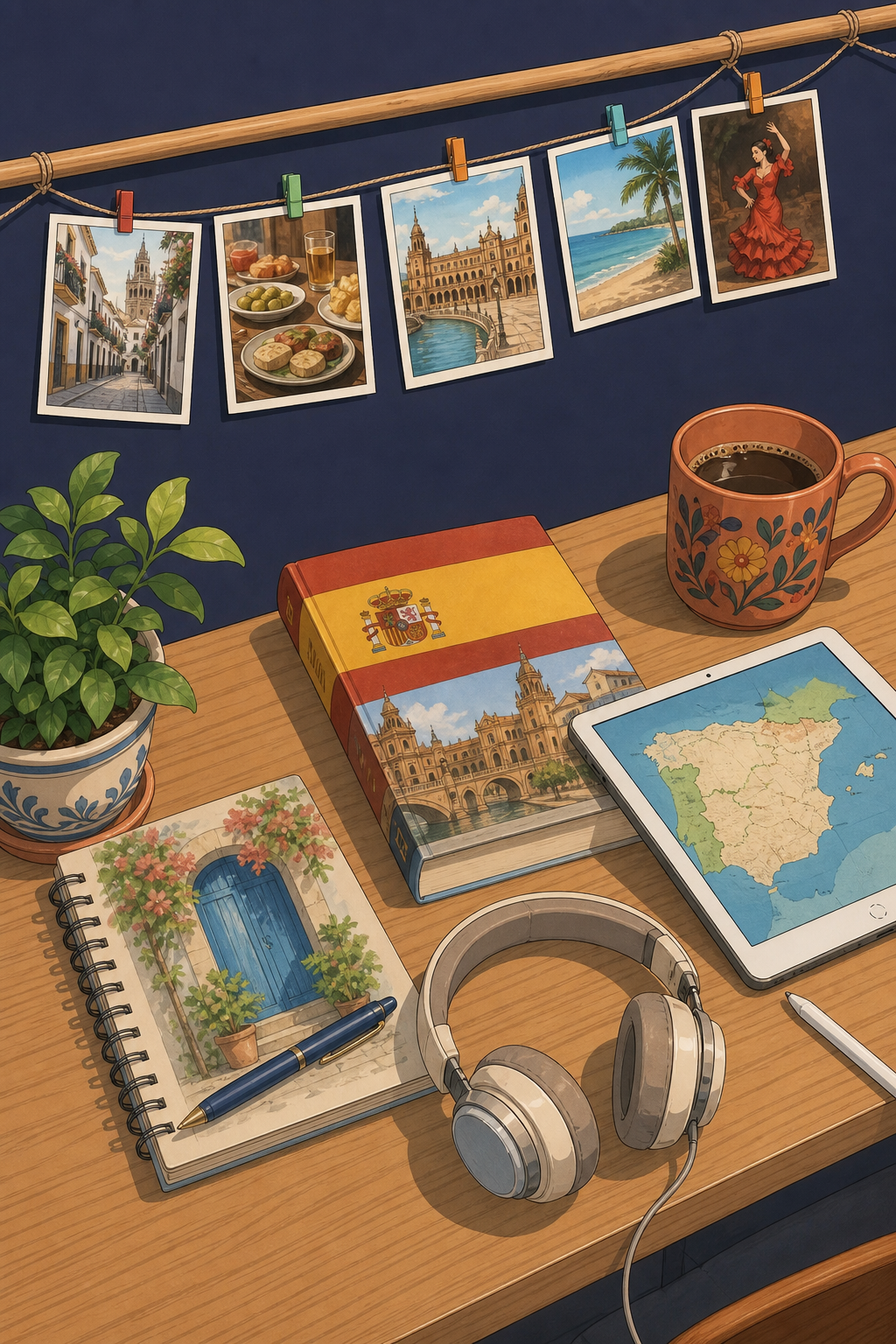
The easiest language to learn for English speakers is not a matter of opinion. It comes down to four concrete factors: shared vocabulary, grammar structure, writing system, and how the sounds line up with what your mouth already knows how to do. Get all four working in your favor and you're looking at roughly 600 classroom hours to fluency. Get three of them working against you and you're looking at 2,200. Here's what the research actually says.
TLDR:
- Spanish, French, Dutch, and Norwegian fall in FSI Category I, requiring 552 to 690 classroom hours, roughly four times fewer than Mandarin, Arabic, or Japanese at 2,200 hours.
- Your native language determines which languages are actually easy for you: a Spanish speaker learning Portuguese shares roughly 90% of the vocabulary before opening a textbook.
- You can read a Spanish newspaper at B2 and still freeze when a barista asks a simple question, because comprehension and real-time production are separate skills that develop separately (Swain's Output Hypothesis, 1985).
- A 2024 review of AI chatbots for speaking practice found benefits across anxiety reduction, confidence, and speaking outcomes, yet the core problem is that most self-study plans skip spoken output entirely.
- ISSEN is a real-time AI voice tutor covering 60+ languages that adapts difficulty in real time and remembers context across sessions, as one input inside a broader study plan at $20 to $29 USD per month.
What makes a language easy to learn for English speakers
Ease of learning is a measure of distance between two languages, and for English speakers that distance governs how many hours you spend before your mouth catches up with your brain. Four factors do most of the work.
- Shared vocabulary. English shares thousands of cognates with Romance and Germanic families thanks to Norman French and its Germanic roots, and understanding effective language learning techniques helps you exploit those overlaps faster. If "restaurante" already looks familiar, you are borrowing memory instead of building it.
- Grammatical similarity. Subject-verb-object languages without heavy case systems (Spanish, Dutch, Norwegian) let you re-use English syntactic instincts. Case-heavy or agglutinative languages (Russian, Turkish, Finnish, Japanese) force you to rebuild them.
- Writing system familiarity. Latin alphabet means reading on day one. Cyrillic adds weeks. Arabic and Hebrew add months. Chinese characters and Japanese kanji add years, because fluency depends on recognizing thousands of symbols.
- Phonetic predictability. Spanish, Italian, and Finnish are close to phonemically transparent. Tonal systems (Mandarin, Vietnamese, Thai) and unfamiliar sounds (French nasal vowels, Arabic pharyngeals, the Czech "ř") add friction.
When all four line up in your favor, the road is short. When three cut against you, expect years.
How the FSI ranks language difficulty
The Foreign Service Institute trains US diplomats and has published class-hour estimates for decades, which is why it remains the most cited difficulty benchmark for English speakers. The hours reflect intensive small-group instruction plus self-study, roughly 25 hours per week. Learning solo in fragmented sessions, plan on 1.5 to 2 times the figure.
Category | Examples | Approx. class hours |
|---|---|---|
I | Spanish, French, Dutch, Norwegian | 552 to 690 |
II | German | 900 |
III | Indonesian, Swahili | 900 |
IV | Russian, Polish, Turkish, Hebrew | 1,100 |
V | Mandarin, Arabic, Japanese, Korean | 2,200 |
The gap between the easiest and hardest tier is roughly fourfold.
The easiest languages for English speakers to learn
Category I is where shared vocabulary, Latin alphabet, and familiar syntax all break in your favor. Here is the short list, with the specific reason each one earns its ranking.
- Norwegian. Germanic sibling to English with stripped-down grammar. No case system, one verb form per tense across all persons ("jeg er, du er, hun er"), and word order that mirrors English closely.
- Spanish. Phonetically transparent, massive Latin-rooted vocabulary overlap, and a stable five-vowel system. Verbs conjugate heavily, but the patterns are regular.
- French. Enormous shared vocabulary from the Norman Conquest (roughly a third of English words trace back to French). Pronunciation and spelling drift is the main tax.
- Italian. Latin cognates, near-phonemic spelling, and open vowels that make listening easier than French.
- Portuguese. Vocabulary close to Spanish and Italian. Brazilian Portuguese has an approachable rhythm, though nasal vowels take practice.
- Dutch. The closest major language to English structurally. The "g" sound and separable verbs are the main hurdles.
- Swedish. Simple verb conjugation, Germanic vocabulary, and predictable stress. Pitch accent rarely blocks comprehension.
- Danish. Grammar as clean as Swedish. Soft consonants and swallowed endings make listening harder than reading.
- Romanian. The odd one in Category I: a Romance language with case remnants from Latin.
- Afrikaans. Descended from Dutch and radically simplified. No verb conjugation for person, no grammatical gender. Arguably the fastest of the group on paper.
A closer look at Spanish, French, and Dutch
Spanish
Spanish is the pragmatic default: roughly 486 million native speakers across more than 20 countries, and how long it takes to learn Spanish depends heavily on how you structure those hours. Pronunciation is close to phonemically transparent, so what you read is close to what you say. The tax comes later, in verb conjugation. Present tense is manageable; the subjunctive and the preterite-imperfect distinction will trip you for months. Regional variation is real (Rioplatense "vos," Castilian "vosotros," Caribbean elision), so pick a target dialect early.
Spanish earns the top recommendation on practical grounds: 486 million speakers across 20+ countries gives it the highest utility per hour invested. Norwegian and Afrikaans have simpler grammar, and Dutch sits closer to English structurally, but those advantages matter less when the real question is how far the language takes you.
French
French rewards English speakers for a reason most learners underestimate: the Norman conquest of 1066 pushed a huge layer of French vocabulary into English, though how long learning French takes still surprises most beginners. Roughly a third of English words trace back to French roots, so your passive vocabulary is larger than you think from day one. "Government," "restaurant," and "important" translate almost directly.
The friction is phonetic. Nasal vowels ("un bon vin blanc"), silent letters, and the gap between spelling and pronunciation mean reading fluency arrives before listening fluency. Liaison rules run sounds together in ways the written form does not prepare you for.
Dutch
Dutch is the closest major language to English inside the Germanic family. Word order and sentence structure feel familiar quickly ("Ik heb een boek" maps almost word-for-word to "I have a book"). No case system, no grammatical complexity comparable to German.
Two hurdles stand out. The guttural "g" has no English equivalent, and separable verbs (where the prefix drops to the end of the clause) require some rewiring. For English speakers moving to the Netherlands or Belgium, Dutch is one of the fastest returns on study hours available.
The hardest languages for English speakers
Category V contains the hardest languages for English speakers: Mandarin Chinese, Cantonese, Arabic, Japanese, and Korean, each estimated at 2,200 classroom hours for English speakers. The difficulty is specific, structural, and stacked.
- Mandarin Chinese. Four lexical tones plus a neutral tone mean "ma" can be mother, hemp, horse, or scold. Functional literacy requires recognizing 2,000 to 3,000 characters.
- Cantonese. Six tones (nine by some counts), thin romanization support, and colloquial speech that diverges heavily from written standard Chinese.
- Arabic. Root-and-pattern morphology, a right-to-left script that omits short vowels, and a diglossic split between Modern Standard Arabic and regional dialects (Egyptian, Levantine, Gulf, Maghrebi).
- Japanese. Three scripts (hiragana, katakana, 2,000+ kanji), subject-object-verb order, and a keigo politeness system that rewrites verb stems by social relationship.
- Korean. Hangul is learnable in a weekend, which is the trap. Underneath sits agglutinative grammar with speech levels tied to age, status, and setting.
Category IV languages sit at 1,100 hours. Russian and Polish carry six or seven grammatical cases. Turkish is agglutinative: one word can carry what English needs a clause for. Hebrew shares Arabic's root-based morphology and right-to-left script without the diglossia. Finnish and Hungarian pile on 15+ cases each. Reachable, but they demand more reps before anything feels automatic.
Why difficulty is always relative to your native language
Every difficulty ranking assumes a starting point, and the FSI's happens to be English. Change the first language and the map redraws itself.
Linguistic transfer is the mechanism. Shared vocabulary, similar grammar, and overlapping sound systems shorten the road; unfamiliar scripts and unfamiliar syntax lengthen it. A Spanish speaker learning Portuguese is borrowing roughly 90% of the vocabulary and most of the verb logic already, which is why Portuguese is routinely ranked the easiest second language for Spanish natives. Italian and French sit close behind.
For French speakers, Italian and Spanish are the short paths. German gets easier for Dutch speakers than anyone else, because Dutch already carries the Germanic case instincts in a milder form. Russian speakers find Ukrainian, Polish, and other Slavic languages far more approachable than the FSI's English-anchored table would suggest, thanks to shared case systems and Cyrillic overlap.
Script matters too. A Mandarin speaker studying Japanese can read a surprising amount of kanji on day one, even without knowing how the words sound. That head start doesn't exist for English speakers, who face the writing system as new territory.
When you see a list ranking languages by ease, ask which native language it was written for. If your first language is Spanish, French, German, Russian, or Mandarin, the closest targets differ, and the hours to fluency shift with them.
The speaking gap that limits progress at every difficulty level
Picking a language is the easy part. What determines whether you can hold a conversation two years in is not the FSI hours but how many of those hours involved producing spoken language under real-time pressure, which is why speaking your target language from day one matters more than most plans acknowledge.
Merrill Swain's Output Hypothesis (1985) named the mechanism. Comprehension lets you glide over gaps; production forces you to notice them. When you pull a sentence out of your head in real time, you find out which conjugations you actually own.
This is why the freeze happens. You can read a Spanish newspaper at B2 and still go blank when a barista asks if you want your coffee for here or to go.
The gap scales with difficulty but doesn't disappear at the easy end. Norwegian learners freeze on word order. Japanese learners freeze on particles and keigo. Category changes what you freeze on, not whether you freeze. Closing it requires reps of forced spoken output with immediate feedback, the speaking practice most self-study routines quietly skip.
How AI voice practice changes the learning timeline
AI voice practice does not shorten the FSI hours. It changes what those hours can contain. The bottleneck for most self-studiers is speaking time, and speaking time has historically been rationed by tutor availability, cost, and the social risk of failing in front of another human.
A 2024 review of AI chatbots for speaking practice found benefits across anxiety reduction, confidence, pronunciation practice, and speaking outcomes. When the cost of a botched sentence drops to zero, you attempt more sentences, and attempt volume is what turns declarative knowledge into automatic speech.
Shadowing trains prosody but gives no response. Recording yourself catches errors you already knew. Self-talk has no external correction. None creates the unpredictable back-and-forth that forces you to produce language you didn't rehearse.
Used as one layer inside a broader plan, AI voice practice fills the speaking gap that grammar books and apps leave open. Reviewing the top AI apps for language conversations can help you pick the right ones. Grammar study, reading, vocabulary work, and human conversation partners still matter. What changes is that the speaking reps your plan was quietly starving of are now available on a Tuesday night at 11pm without booking anyone.
ISSEN: real-time voice tutoring across 60+ languages
Whatever language you land on, the constraint is the same: speaking reps under real-time pressure. ISSEN is an AI voice tutor built for that gap.
The tutor drives the conversation, adapts vocabulary and pace to your level in real time (Krashen's i+1 as a continuous condition, not a placement test), and remembers what you struggled with last session. Sessions start within 30 seconds. Smart turn detection reads when you're hesitating and when you're done, so exchanges flow like a real conversation.
A few things worth knowing:
- 60+ languages, including less commonly taught ones like Persian, beyond the Category I favorites.
- Background mode runs from the lock screen, converting walks and commutes into speaking reps.
- Conversation-anchored SRS pulls flashcards from sentences you actually said, with original context attached.
- Available on iOS, Android, and web with cross-device sync, at $20 to $29 USD per month depending on plan and country.
ISSEN is one tool inside a broader study plan. Grammar books, tutors, and reading still matter. What it removes is the tutor-access bottleneck on daily speaking practice. Try ISSEN free for 10 minutes and see where your speaking level actually sits.
Final thoughts on language difficulty and what it means for your learning
Difficulty is a starting-point question as much as a language question, and the FSI table assumes English as that start. The four factors (shared vocabulary, grammar similarity, script familiarity, and phonetic predictability) tell you most of what you need to know before you commit to a language. Speaking practice is where most self-study plans quietly fall short, and the gap between what you can read and what you can say only closes with real output reps.
Consider Marcus, a logistics manager in Amsterdam who has been reading Spanish contracts for six months and tracking every cognate. He can parse a dense legal clause but freezes the moment a Colombian supplier calls and asks a simple question off-script. His reading level is B2; his spoken output is closer to A2 under pressure. Over the next two to three years, tutors that remember his specific vocabulary gaps, his supplier context, and the register he needs for professional calls, surfacing those things mid-conversation instead of in a post-session report, will close that gap faster than any static curriculum can. That kind of session-aware adaptation is where AI voice tutoring is heading. Try ISSEN free for 10 minutes to see where your spoken production actually sits.
FAQs
What's the easiest language to learn for English speakers, and does that change if your native language is Spanish, French, or German?
For English speakers, Norwegian, Spanish, Dutch, and French rank at the top because they share vocabulary, use the Latin alphabet, and follow subject-verb-object word order. The FSI estimates 552 to 690 classroom hours for all of them. The map looks completely different if you start elsewhere: Spanish speakers find Portuguese closest (roughly 90% vocabulary overlap), French speakers reach Italian and Spanish fastest, and German speakers have a structural head start in Dutch. Any difficulty ranking is anchored to a specific first language, so check which native language the list was written for before trusting the numbers.
What are the top 10 hardest languages to learn for English speakers, and why does the gap feel so steep?
The FSI's Category V languages (Mandarin, Cantonese, Arabic, Japanese, and Korean) each require around 2,200 classroom hours, roughly four times the Category I estimate. The difficulty stacks: tonal systems, unfamiliar scripts, agglutinative or case-heavy grammar, and diglossia (Arabic) combine in ways that hit every weak point an English speaker has simultaneously. Category IV languages like Russian, Polish, Turkish, and Hebrew sit at around 1,100 hours for the same reasons, just with fewer stacked obstacles.
How do I get better at speaking a language when I have no one to practice with?
The core problem is output volume: reading and listening build receptive skills, but pulling sentences out of your head under real-time pressure is a separate skill that only improves with reps. Self-talk and shadowing help at the margins, but neither gives you unpredictable back-and-forth or real-time correction, the two things that force you to notice gaps. An AI voice tutor like ISSEN fills exactly that gap: sessions start in 30 seconds, conversations are open-ended, and the tutor adapts difficulty turn by turn so you're producing language just beyond your current level instead of rehearsing sentences you already know.
Is Spanish actually the easiest language to learn for English speakers, or is that just the most common recommendation?
Spanish tops most lists for utility: the phonetic transparency and speaker density make daily practice opportunities hard to match. For most learners asking this question on Reddit or elsewhere, the real answer is that the easiest language to learn for English speakers is the one with the most useful daily context for their life, whether that's Spanish for work, Norwegian for a relationship, or French for an upcoming move.
What language learning app should I use if I want real conversational practice instead of gamified drills?
Duolingo and Babbel are built around vocabulary retention and streak mechanics, genuinely useful at the earliest stages, but they don't produce the spoken output volume that closes the gap between knowing a language and speaking it under pressure. For daily conversational practice, you need something that drives back-and-forth exchanges, corrects you in real time, and scales with your level instead of capping out. ISSEN is an AI voice tutor built for that use case: it covers 60+ languages, including less commonly taught ones, runs sessions from the lock screen during walks or commutes, and builds flashcards from sentences you actually said instead of pre-packaged decks. It works best as one layer inside a broader study plan alongside grammar resources and, when possible, human conversation partners.