
The Best Way to Learn Spanish for Travel in June 2026
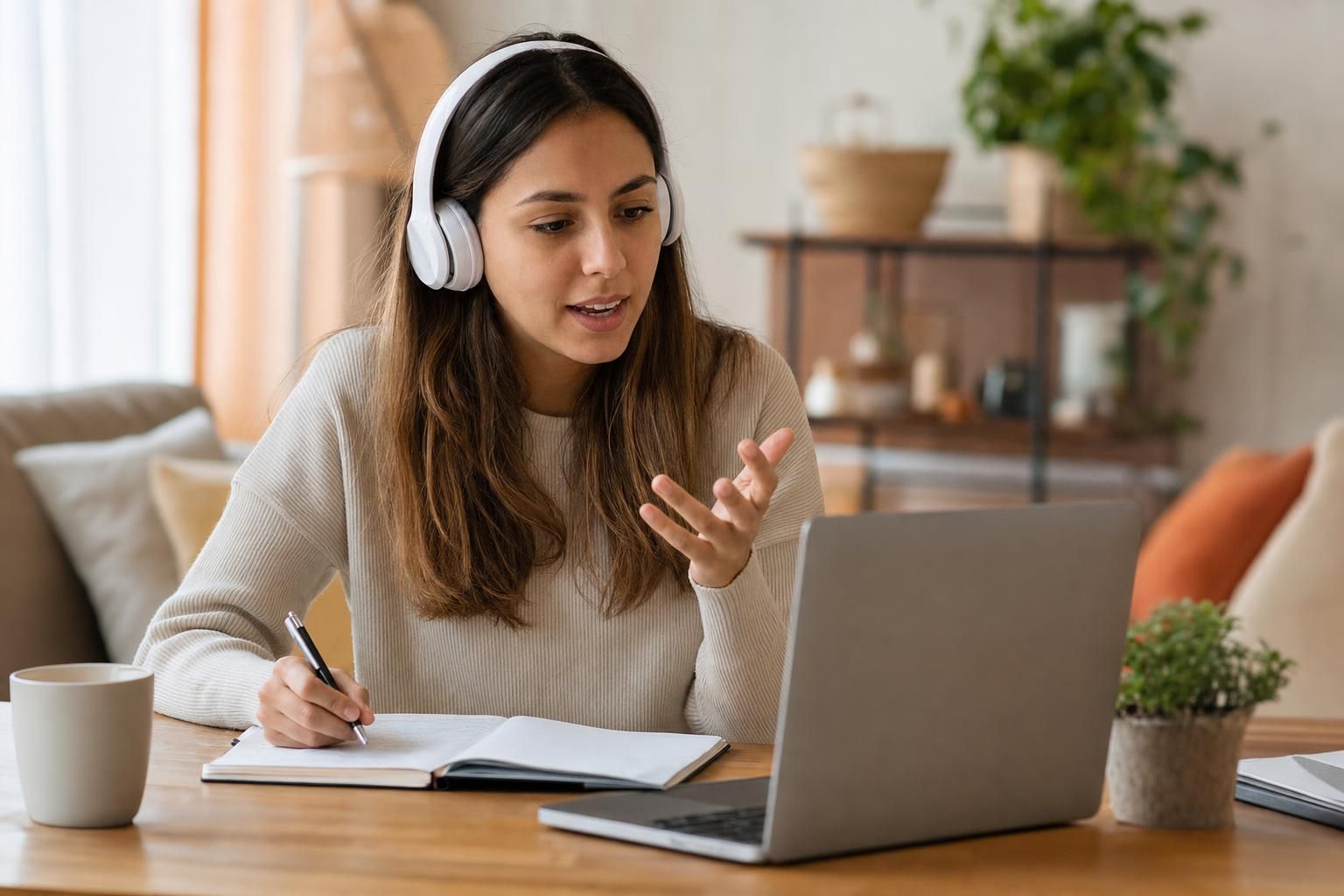
Everyone learning Spanish for immediate real-world use faces the same mismatch. The textbook gives you grammar progression. Your actual problem is surviving a pharmacy visit, a bus ticket window, and a restaurant where no one speaks English. You don't need the subjunctive before you're handling these situations. You need 30 core phrases drilled until they come out automatically, enough listening practice to catch a gate number announcement, and the confidence to ask a follow-up question when the first answer doesn't land. That gap between how Spanish is usually taught and what you actually need for daily survival is what this post covers.
TLDR:
- You need A2 to low B1 Spanish (roughly 260 to 300 hours from zero) to handle routine situations and recover when things go off-script in Spanish-speaking environments.
- Listening and speaking under time pressure matter more than grammar or writing for daily survival. Drill 30 to 40 core phrases until they come out automatically.
- Eight weeks of focused daily practice (20 to 45 minutes) gets most learners from zero to travel-ready through scenario rehearsal and situational vocabulary clustering.
- AI voice tutors like ISSEN let you run on-demand scenario roleplay (hotel check-in, taxi negotiation) with regional accent selection until the freeze stops.
Why learning Spanish for immediate use is different
Someone studying Spanish for immediate daily use has a different problem than a traditional student. You need functional Spanish now, not in six months. The verb conjugation tables filling the first 80 pages of most textbooks won't help you ask where the bus to Antigua leaves at 6am.
Generic beginner courses sequence content around grammar progression: present tense, preterite, imperfect, subjunctive. By the time you reach the restaurant chapter, your trip is over.
The realistic target for most travelers is A2 or low B1, the band where you handle predictable everyday situations and recover when something goes off-script. According to Hispanic Horizons' breakdown of Spanish levels, A2 or B1 covers most of what you face abroad. Reaching A2 from zero takes 260 to 300 hours of study.
What you actually need for daily survival is narrow: fast comprehension of menus, signs, prices, and directions; a small set of phrases you can produce without thinking; the ability to understand a reply spoken at normal speed by a clerk, a driver, or someone at the counter.
What "good enough" looks like for daily survival
"Good enough" for daily survival means handling the situations that actually come up, not narrating your childhood in the past subjunctive. At A2, Lingoda's level breakdown places you at routine exchanges: ordering food, asking prices, handling administrative tasks.
B1 is the realistic ceiling for a few months of focused prep, and at that level you handle the unexpected: the train was canceled, the pharmacy is closed, your landlord needs to reschedule, and you won't sound elegant but you'll get through it. Below A2, every interaction is a small ordeal; above B1, you stop counting.
The priority skill stack for immediate use
Rank the four skills the way someone needing functional Spanish should actually order them, and priorities flip from typical courses.
- Listening. The hardest skill and the one that fails first. You rehearse your question for the ticket window all morning, the reply comes back at native speed, and you're lost.
- Speaking. Producing a clear question is easier than parsing a stranger's answer, but the freeze response is real. Years of study collapse the moment a clerk turns to you.
- Reading. Useful for menus, signs, schedules, and maps. Low effort, high payoff.
- Writing. Nearly irrelevant for travel.
Train the top two under time pressure. Catching the gate number beats perfect grammar.
Core vocabulary and phrases for daily survival
Build a small set of phrases you can produce without thinking. A pocketful of reliable lines beats a vocabulary list you half-remember when the cashier is waiting.

Core greetings and courtesy
Buenos dias, buenas tardes, buenas noches. Por favor and gracias. Disculpe to flag someone down, perdon when you bump into them. Drill these until they come out automatically.
Navigation and dining
Donde esta la estacion? A la izquierda, a la derecha, todo recto. Quisiera, me trae, la cuenta por favor. Soy alergico a (nuts, shellfish, gluten). Practice the replies, since the questions are the easy part.
Accommodation and emergencies
Tengo una reserva a nombre de. El aire acondicionado no funciona. Necesito ayuda, llame a una ambulancia, me duele aqui.
Situation | Spanish Phrase | Pronunciation Hint |
|---|---|---|
Greeting | Buenos dias | BWAY-nos DEE-as |
Asking location | Donde esta...? | DON-day es-TAH |
Ordering | Quisiera... | kee-see-EH-ra |
Emergency | Necesito ayuda | neh-seh-SEE-toh ah-YOO-da |
Paying | La cuenta, por favor | la KWEN-ta por fah-VOR |
Situations You'll Face and How to Prepare
Six situations cover most of what you'll actually face. Rehearse each one out loud before you go.
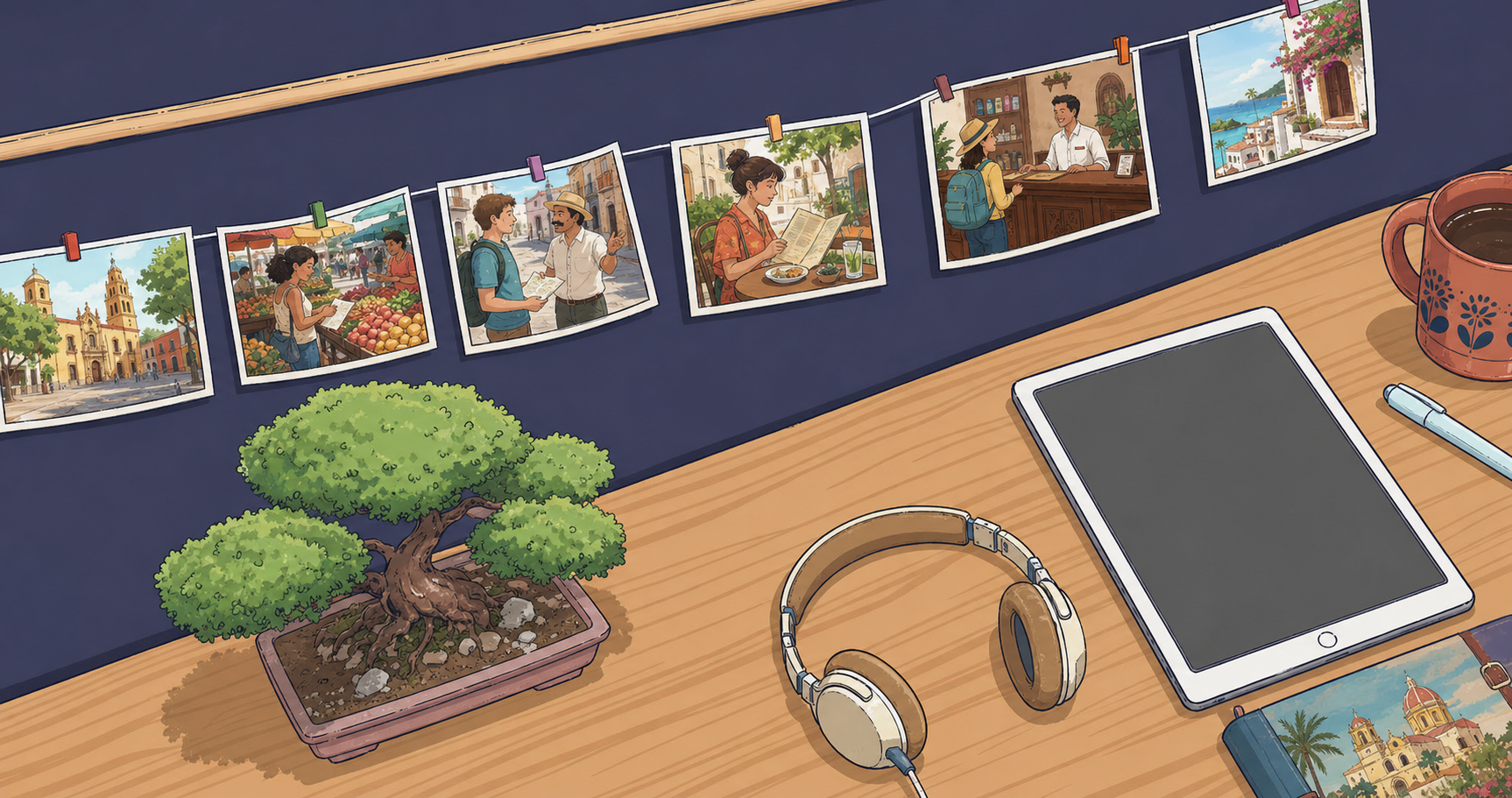
Ordering at a restaurant
"Una mesa para dos, por favor." The waiter will ask "para tomar?" and later "algo mas?" Close with "la cuenta, por favor" and "puedo pagar con tarjeta?" In smaller towns, cash is often the default.
Asking for directions
"Disculpe, donde esta el museo?" Expect a la izquierda, a la derecha, todo recto, or a la vuelta. Confirm with "entonces, izquierda en la proxima calle?"
Checking into a hotel
"Tengo una reserva a nombre de Smith." Follow with "cual es la clave del wifi?" or "a que hora es el desayuno?" If something breaks: "el aire no funciona."
Handling transportation
"Un boleto para Oaxaca, por favor. A que hora sale? De que anden?" On buses, ask "para en el centro?" to confirm your stop.
Shopping and bargaining
"Cuanto cuesta?" gets the price. In markets, "me lo deja en cien?" tests the floor. Walk away with "lo voy a pensar" if the number stays high.
Handling misunderstandings
"Mas despacio, por favor." "Puede repetir?" "No entiendo, lo puede escribir?" Handing over your phone for them to type a number or street name saves you every time.
Study Plan: From Zero to Travel-Ready
Eight weeks of focused practice gets most travelers from zero to functional. According to FluentU's guide on Spanish learning timelines, reaching A1-A2 within three months is realistic with daily study.
Weeks 1-2: Foundation and survival phrases
Drill greetings, numbers, and 30 to 40 core phrases. Shadow audio out loud daily.
Weeks 3-4: Situational vocabulary
Cluster vocab by setting: restaurants, hotels, transport, shops. Build reusable sentence templates.
Weeks 5-6: Listening and conversational flow
Hold short practice conversations. Focus on parsing replies and asking follow-ups.
Weeks 7-8: Scenario rehearsal
Roleplay the six situations until responses come without thinking.
Why an AI tutor is ideal for rapid Spanish acquisition
Booking a weekly tutor to rehearse "una mesa para dos" is overkill, and by the time you've scheduled three sessions, you've lost two weeks of daily practice time.
An AI voice tutor closes that gap. ISSEN runs full Spanish conversations from the first session, adjusting speed and vocabulary to your level. A few things matter for travel:
- Scenario roleplay on demand. Tell the tutor "you're a taxi driver in Mexico City and I just got in" and run it five times until the freeze stops.
- Regional accent selection. Practice Mexico, Argentina, or Spain accents depending on where you're flying.
- Low-stakes mistakes. Mispronouncing "andén" with a tutor at 11pm beats fumbling it with a stranger in a station.
- Background mode. Drill phrases while walking the dog, so prep fits the time you already have.
Three scenarios worth running repeatedly: handling an administrative error with a clerk, asking a pharmacist for something when you don't know the word, and negotiating a price before committing to a transaction.
What to Skip (to Save Time)
Most courses pad the syllabus with material you won't use abroad. Cut these four categories and reclaim the hours.
Complex grammar rules you don't need
Skip the subjunctive. Skip the preterite-imperfect distinction past basic awareness. Travelers run on present tense, the near future (voy a + infinitive), and a few past forms locked into fixed phrases ("me equivoque," "se cancelo").
Literary and academic vocabulary
Business Spanish and literary terms eat study time you need for "donde esta el bano." News-article Anki decks work for B2 learners settling in. They drag travelers backward.
Perfect accent obsession
Intelligibility beats nativelike pronunciation. If a Mexico City pharmacist understands you on the first try, the accent did its job. Endless drills on the rolled R delay the conversations that build fluency.
Writing practice
Composing essays trains a skill you won't use. A quick WhatsApp to your Airbnb host is the entire writing curriculum a traveler needs.
Cultural notes for Spanish-speaking contexts
Formality and how to speak to people
Tu is informal, usted is formal. In Mexico and Colombia, default to usted with anyone older or in a service role until they switch. In Spain, tu is the norm except with the elderly. Argentina and Uruguay use vos with its own endings ("vos tenes" instead of "tu tienes"). When unsure, usted is the safer miss.
Meal times and dining customs
Spain eats late: lunch 2 to 4pm, dinner 9pm or later. Latin America keeps earlier hours, and lunch is the main meal. Tipping conventions vary by country: 10 percent is generous in Mexico and Argentina; in Spain, servicio is often included.
Greetings and directness
One kiss on the right cheek is standard between women, and between women and men who know each other. Men shake hands. Standing closer than feels natural to an American is normal.
English softens requests with "could you." Spanish uses "me podria" and the conditional. "Dame agua" sounds rude. "Me podria traer agua, por favor" lands the same request cleanly.
Regional vocabulary differences
Picking the right regional accent in practice, whether Castilian, Mexican, or Argentinian, pulls the matching vocabulary along with it.
Where Spanish acquisition is heading in the next two years
Imagine Carmen, a logistics coordinator in Guadalajara whose company just signed a contract with a Houston-based distributor. She passed a B1 exam two years ago but hasn't spoken English regularly since. Her manager expects her to handle weekly video calls starting in three months, and she needs more than reading comprehension. She needs real-time conversational confidence under pressure. Within two years, AI voice tutors will track both vocabulary gaps and situational fluency: the tutor will know Carmen freezes during interruptions, that she drops articles under time pressure, and that her comprehension collapses when the American account manager speaks quickly. It will drill those exact breakdowns in roleplay until the cognitive load drops and the response comes automatically. The shift from general-purpose language apps to tutors that diagnose and remediate specific performance gaps (how you handle a pricing negotiation versus how you summarize a logistics delay) turns Spanish from a subject you study into a skill you can deploy when the video call actually starts.
Final thoughts on practical Spanish acquisition
Grammar tables won't help you ask where the bus leaves at 6am, but 30 drilled phrases and 200 hours of listening practice will. Your realistic target is A2 to low B1, the band where you handle predictable exchanges and recover when something goes sideways. If you need functional Spanish within eight weeks, start running scenario drills now with ISSEN and rehearse the administrative conversation, the pharmacy visit, and the price negotiation until they come out clean.
FAQ
How long until I can handle travel situations in Spanish?
Two to three months of 20 to 30 minutes daily gets most learners to A2 survival level, enough to handle ordering food, asking directions, and predictable exchanges.
Is survival-level enough?
A2 to low B1 handles most predictable daily situations. Full fluency is a multi-year project that immediate survival needs don't require.
Can I use translation apps instead?
As a backup, yes. In a noisy market or a quick taxi exchange, they fall apart. They also kill the small connection that attempted phrases create.
What's the biggest mistake travel learners make?
Studying grammar instead of drilling phrases out loud, and waiting to feel "ready" before speaking. Start talking in week one.
Is an AI tutor enough without a human teacher?
For travel prep, AI tutors handle on-demand scenarios well. For long-term study, a human teacher adds cultural depth and accountability worth the cost.