Master Spanish as a Heritage Speaker - June 2026
Spanish was the first language you heard. You understand your abuelos without effort. But when you need to speak in a professional setting or write something formal, the words don't come, or they come out in English. Heritage speakers face a specific gap: you have near-native listening and deep cultural knowledge, but formal speaking and writing were never taught. Most classrooms make this worse by placing heritage Spanish learners in beginner courses that drill colors and numbers you learned before kindergarten, or in advanced courses that expect essay-level literacy you never developed. What closes the gap is activation: daily practice that moves Spanish from passive recognition into active production, targeted work on formal registers and grammar, and helping you reclaim the language without losing the family vocabulary and code-switching that reflect your bilingual identity.
TLDR:
Heritage speakers understand Spanish near-natively but freeze in formal speech because receptive skills (listening, cultural fluency) develop separately from productive skills (speaking, writing in professional registers).
Your goal is functional bilingualism across more registers, not monolingual perfection—you can hold a work meeting in Spanish without code-switching mid-sentence while keeping your family's regionalisms.
Focus practice on formal speaking (job interviews, client calls), writing (emails with subjunctive and accents), and professional vocabulary—skip beginner drills for pronunciation and greetings you mastered as a child.
Many heritage speakers reach professional conversational confidence in as few as 8 to 12 weeks with consistent daily voice reps on formal register, starting with 20 minutes of subjunctive drills and building to scenario rehearsals — though timelines vary by starting point and consistency.
AI voice tutors remove the social cost of correction: you can practice the subjunctive slip a tía would tease you about on a Tuesday night with nobody watching, then bring the polished version to family dinner.
Why Learning Spanish for Heritage Speakers Is Different
You grew up hearing Spanish at the table. You understand your abuela perfectly, but your answer comes out in English, or in Spanish that feels half-formed.

This is the heritage speaker gap. Receptive skills (listening, cultural fluency) often sit near-native. Productive skills (formal speaking, writing, academic registers) lag behind. Many heritage speakers carry advanced listening and deep cultural knowledge while lacking formal registers or literacy training (heritage speakers in schools and society).
Classrooms handle this poorly. Beginner courses drill greetings you internalized at age four. Advanced courses assume you write essays in Spanish. Heritage Spanish learners get placed in the wrong room either way.
What you need is activation work: pulling Spanish out of passive memory, sanding down formal grammar gaps, and building the confidence to speak without code-switching mid-sentence.
What "Good Enough" Looks Like for Heritage Speakers
Forget the monolingual Spanish ideal. Your target is functional bilingualism with a wider range of registers than you have today.
Here is what that actually looks like:
You can hold a work meeting in Spanish without dropping into English when the topic turns technical.
You can read a contract or news article and write a reply that does not embarrass you.
You code-switch on purpose, for warmth or effect, instead of as a fallback when a word disappears.
You keep your accent, your family's vocabulary, and your regionalisms. Those are assets.
The work is growth, sanding down rough edges around formal speech and literacy.
The Priority Skill Stack for Heritage Speakers
Heritage learners need a different approach. Listening and recognition already work. The gap sits in production and literacy. Research confirms heritage learners' instructional needs differ fundamentally from second-language learners, shaped by home exposure instead of classroom sequencing (heritage learner instructional needs).
Here is the stack, in order of where your hours should go:
Speaking in formal and professional registers. Job interviews, client calls, parent-teacher meetings, anything that pulls you out of casual home Spanish.
Writing and reading formal Spanish. Accents, punctuation, paragraph structure, the subjunctive in print.
Listening across accents you did not grow up with. Light maintenance for most.
Skip the alphabet. Skip greetings. Spend the saved time on output.
Core Vocabulary and Phrases for Heritage Speakers
The vocabulary you already own covers home, food, family, and feelings. The vocabulary you need lives in offices, classrooms, and email threads. Below are the phrase categories where heritage Spanish learners tend to freeze, along with the subjunctive constructions that show up constantly in formal speech.
Category | Spanish Phrase | English | Register Context |
|---|---|---|---|
Professional | Quisiera programar una reunion | I would like to schedule a meeting | Formal workplace |
Academic | De acuerdo con la investigacion | According to the research | Written/spoken formal |
Adjunto el documento solicitado | I'm attaching the requested document | Professional writing | |
Formal greeting | Mucho gusto en conocerle | Pleased to meet you (formal) | Business introduction |
Subjunctive | Espero que tengamos exito | I hope we succeed | Common formal usage |
Drill these out loud until "quisiera" and "adjunto" feel as natural as "que onda."
Situations You'll Face and How to Prepare
The hardest part of activation is not vocabulary. The hardest part is the moment a tía hears you say "yo va" instead of "yo voy" and corrects you in front of everyone. Heritage speakers often avoid practicing with family for exactly this reason, which slows the production work they need most.
Here are the scenarios that tend to ambush heritage Spanish learners:
Job interview in Spanish. Script answers to "cuenteme sobre usted" and rehearse aloud until "usted" stops feeling stiff.
Client presentations. Build a phrase bank for transitions ("en primer lugar," "para concluir") and run your slides out loud twice.
Professional emails. Draft, then re-read for missing accents and the subjunctive after "espero que."
Conversations with abuelos using older verb tenses. Listen for the preterite and pluperfect, then echo them back.
Run the scenario five times in private before you run it once in public.
Study Plan: From Heritage Knowledge to Active Confidence
Your activation timeline
Activation moves faster than acquisition. You are pulling Spanish forward from passive memory, not building it from scratch. For many heritage speakers, as few as eight to twelve weeks of daily voice reps can build professional conversational confidence, depending on consistency and starting point.
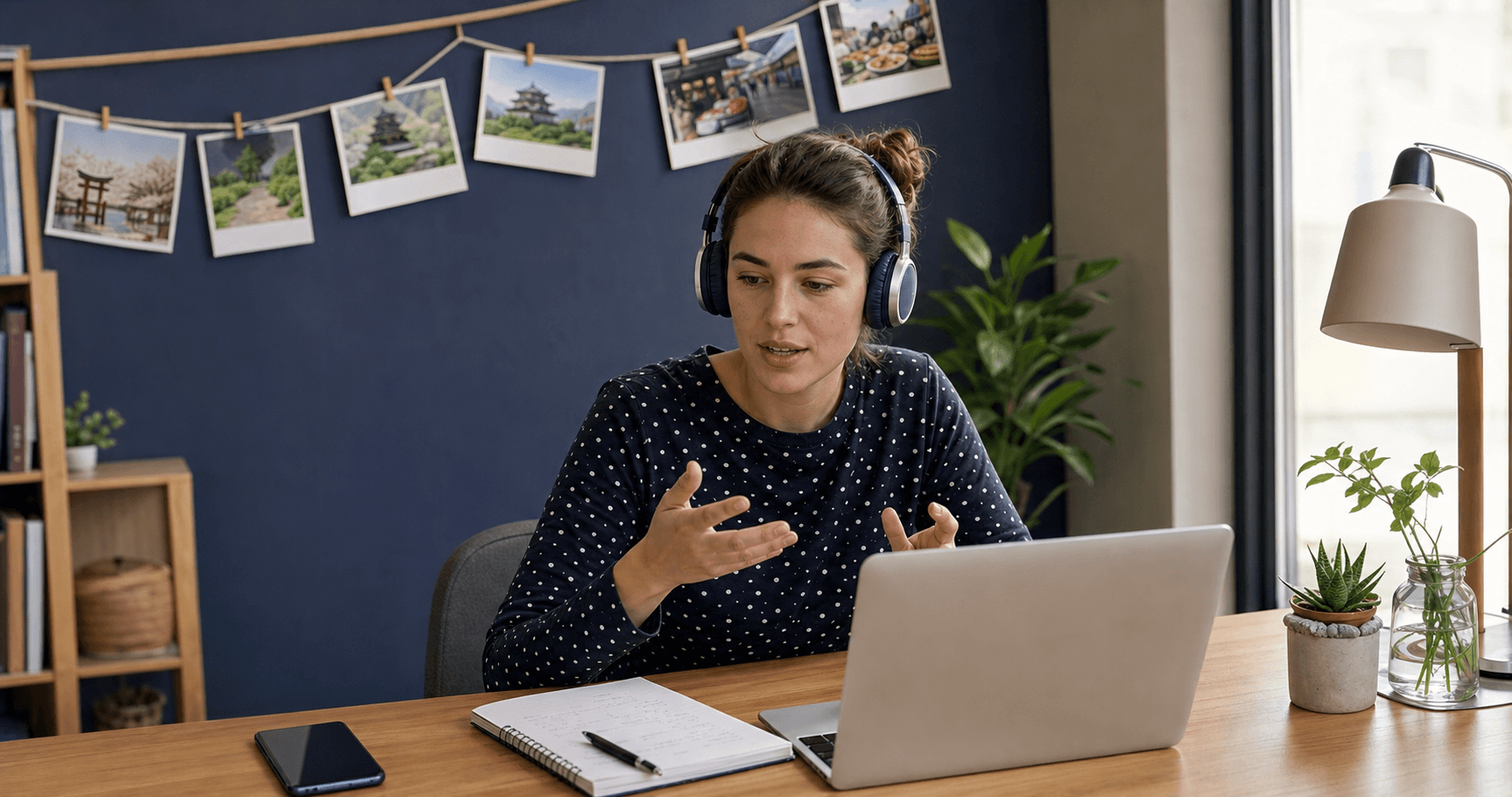
Weeks 1 to 2. 20 minutes of daily voice practice on formal register and the subjunctive. Drill "quisiera," "sería," "espero que," "para que" until they stop sounding like a textbook.
Weeks 3 to 6. Add 15 minutes of daily reading from a Spanish news source. Speak aloud about what you read. Rehearse one professional scenario per week.
Weeks 7 to 12. Layer in writing reps. Draft a weekly email in Spanish, read it aloud, correct it. Hold longer conversations on work projects and news debates in formal register.
The compressible variable is access to speaking reps. Daily voice sessions with an AI tutor remove the scheduling friction that kills most heritage activation plans, and the tutor can pivot mid-session from a client roleplay to debating an article you just read.
Why an AI Tutor Is Ideal for Heritage Speakers
Heritage speakers rarely plateau because of grammar alone. The friction comes from being corrected by people whose opinions matter to you. An AI voice tutor removes that cost.
What makes the format work for heritage learners
A few things make the format fit heritage learners well:
Spanglish is allowed. You can switch into English when a word disappears, and the tutor stays in the conversation instead of grading you.
Accent matching. Pick the regional accent your family speaks, whether Mexican, Argentinian, or Castilian, so your reps reinforce the Spanish you already half-own.
Private correction. The subjunctive slip a tía would tease you about gets fixed on a Tuesday night with nobody watching.
Practice the embarrassing reps in private. Save the family dinner for the conversation.
What to Skip (to Save Time)
Most beginner Spanish material was built for someone who has never heard the language. That is not you. Cut it.
Skip these entirely:
Pronunciation drills for rolled r's, the j sound, and vowel pairs you produced before kindergarten.
Travel survival phrases you have handled in Spanish your whole life.
Present-tense conjugation tables for regular verbs you already speak correctly.
Numbers, colors, days of the week, and family vocabulary.
Spend the recovered hours on the subjunctive, written accent rules, and professional or academic vocabulary. That is where your gap actually lives.
Cultural Notes for Heritage Speakers in Spanish-Speaking Contexts
The Spanish you speak at home carries identity. The Spanish you speak in a Bogota office carries different weight. Heritage speakers learn to move between the two without dropping either.
A few cultural calibrations worth holding onto:
Usted and the subjunctive signal respect across most professional settings in Latin America and Spain. Default to them with clients, in-laws, and anyone older until invited otherwise.
Regional vocabulary varies sharply. "Carro" in Mexico, "coche" in Spain, "auto" in the Southern Cone. "Torta" means a sandwich in Mexico and a cake almost everywhere else.
Your family's Spanish is one regional variety among many. Keep it, and add the formal register on top.
FAQ
How long until heritage speakers handle professional Spanish confidently?
Many heritage speakers reach professional conversational confidence in 8 to 12 weeks of daily voice reps focused on formal register, though timelines vary. Consistency is the main factor, because the receptive foundation is already there.
Do heritage speakers need formal grammar study or just speaking practice?
Both. Targeted grammar and formal register work fills the gap classroom Spanish leaves. Pure conversation without that scaffolding leaves the same holes in professional and academic contexts.
Can heritage speakers use AI tutors effectively?
Yes. AI tutors remove the judgment barrier that makes practicing with family emotionally costly. Being told you are not fluent enough discourages heritage speakers from using the language at all, accelerating language loss tied to identity. Private practice rebuilds confidence before the high-stakes conversations that matter.
What is the biggest mistake heritage speakers make?
Enrolling in beginner courses. They waste hours on pronunciation and vocabulary you mastered as a toddler, while skipping the grammar, literacy, and register work that actually closes the gap.
Is heritage Spanish real Spanish?
The premise is wrong. Heritage Spanish is authentic bilingual competence shaped by family and community. The work is adding range, more registers, more literacy, more situations, without erasing the regional vocabulary or code-switching that reflect who you are.
Final thoughts on Spanish for heritage speakers
Heritage speakers do not start from zero, and the study plan should not pretend otherwise. The vocabulary you own covers home, family, and feelings; the vocabulary you need lives in offices and email threads, and that gap closes in weeks of focused output work instead of years of beginner courses. Spend your hours on formal registers, writing reps, and speaking practice that matches the situations you actually freeze in. Start with an ISSEN tutor in the accent your family speaks, where Spanglish is allowed and nobody watches you trip over the subjunctive. Your regionalisms and code-switching are not deficits; they are bilingual competence shaped by real life, and you are adding range to it.
Where heritage language learning is heading
Imagine Sofia, a project manager in Phoenix. Her parents immigrated from Guadalajara thirty years ago. She understands every word at Sunday dinner but answers her abuela in English because her formal Spanish feels broken. Sofia has six months before her company opens an office in Monterrey, and she needs to present quarterly reports to Mexican stakeholders without freezing mid-sentence when the CFO asks a question she did not rehearse. Two years from now, Sofia's AI tutor will know she grew up hearing Jalisco Spanish, that she needs subjunctive drilling for client-facing contexts, and that code-switching is not a bug to fix but a skill to calibrate. The tutor will surface vocabulary from her last three work presentations, simulate the exact meeting she is nervous about, and correct her the way a colleague would, privately after the call, instead of the way a tía would, in front of the whole table. The gap that kept heritage speakers quiet for a generation closes when the practice tool adapts to the Spanish you already own instead of pretending you are starting from zero.