
Langua Alternatives: Best AI Speaking Apps (November 2026)
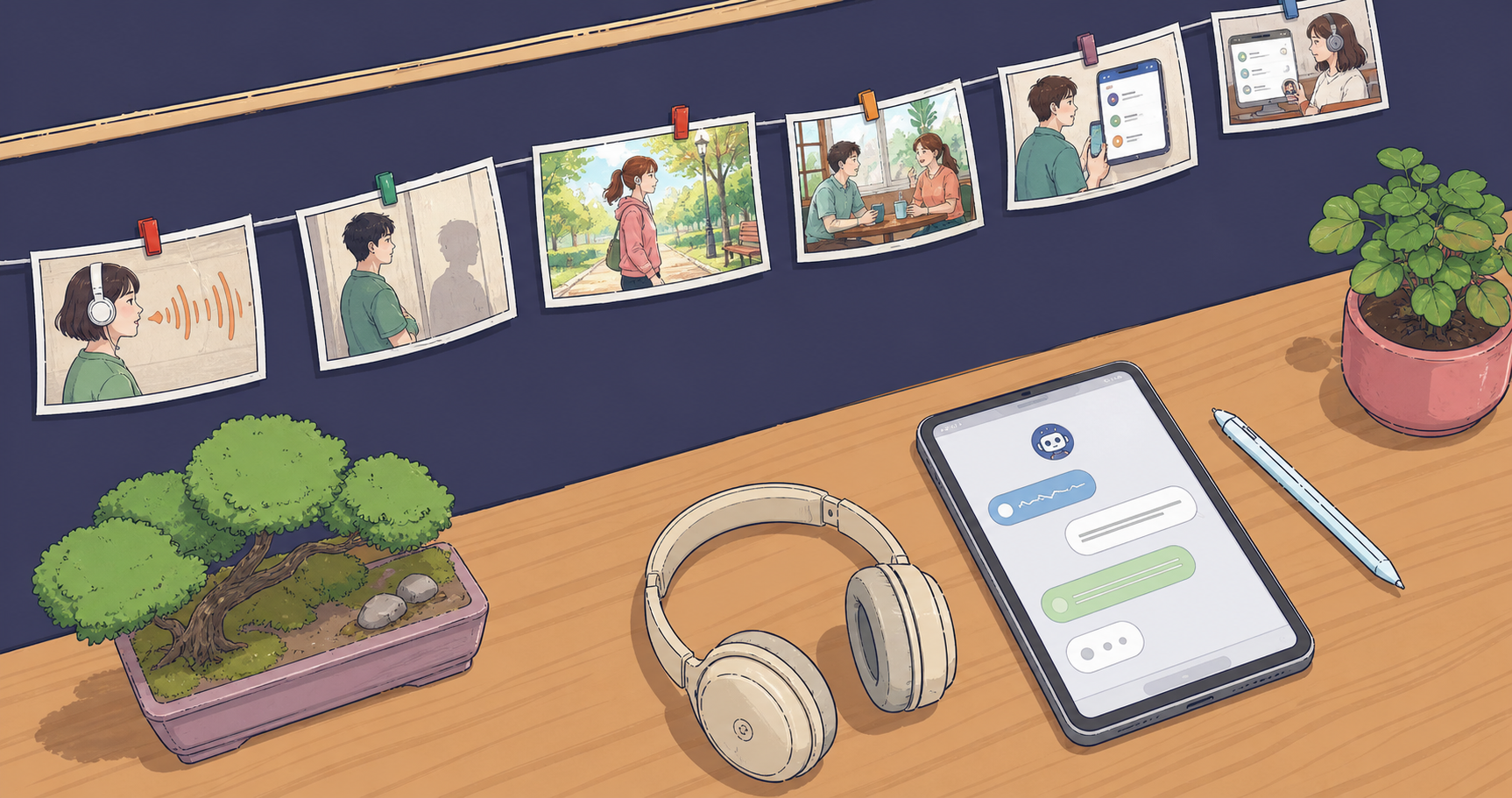
When was the last time you finished a Langua session and felt like you'd actually spoken enough to move the needle? For most intermediate learners trying to build a daily habit, the roleplay library is fine but the call mode drops out, the flashcards don't pull from your real sentences, and you can't practice on a walk without staring at your screen. The six apps below each solve a specific piece of that puzzle, and one of them handles most of it at once.
TLDR:
- Langua's AI tutor works for browser-based roleplay but lacks background mode, so you cannot practice hands-free on walks or commutes.
- Langua has no conversation-anchored SRS, no dedicated shadowing mode, and no multilingual input for Spanglish-style code-switching mid-sentence.
- Loora, Praktika, Talkpal, Speak, and Falou each fill narrow use cases but share the same structural gaps as Langua on daily voice practice.
- ISSEN is an AI voice tutor with smart turn detection, background mode, shadowing across six regional accents, and 60+ languages on iOS, Android, and web.
What is Langua by LanguaTalk and how does it work
Langua is the AI conversation tutor built by LanguaTalk, a company that started as a human tutor marketplace and now positions Langua as its flagship AI language learning product. The idea was to give self-directed learners a way to practice conversation outside of booked lessons, either as a supplement to human tutoring or as a standalone speaking option.
The product offers a few interaction modes: text chat for written practice, a call mode for voice conversations with the AI tutor, and roleplay scenarios where you can rehearse situations like ordering at a cafe or asking for directions. A newer call mode is in beta, aimed at making voice exchanges feel closer to a real phone call. You can read a detailed walkthrough of these modes in Lingtuitive's review of Langua.
Language coverage spans the major European languages plus a handful of others commonly offered on LanguaTalk's human tutor side, including Spanish, French, German, Italian, Portuguese, Mandarin, Japanese, Korean, and Russian.
The target user is the self-directed intermediate learner who wants conversation reps on their own schedule. Someone who already has a grammar foundation, has worked with a tutor before, and wants a lower-cost way to keep speaking between sessions.
Why consider Langua alternatives
Langua has real strengths worth naming before the critique lands. The roleplay library is varied, the content library is tightly integrated with the conversation modes, and the product carries pedagogical DNA from LanguaTalk's human tutor marketplace, which shows up in how lessons are structured and how corrections surface.
The gaps become visible once you try to make Langua your daily speaking tool.

- Call mode has been in beta, and long-term users have flagged reliability issues during voice sessions, as documented in Lingtuitive's multi-year review.
- No dedicated shadowing mode for structured pronunciation drills with pause-and-repeat across regional accents.
- No conversation-anchored SRS. Flashcards do not pull from the sentences you actually spoke, which weakens the memory loop between speaking and review.
- No background or lock-screen mode. You cannot practice hands-free on a walk or during a commute without keeping the app open and focused.
- No multilingual conversation support. If you mix English into a Spanish sentence while reaching for a word, the tutor cannot handle the switch cleanly.
If you want a browser-first roleplay library to work through on your own schedule, Langua fits. If you need daily hands-free speaking reps that fit into walks, commutes, and interrupted days, the fit breaks down.
Best Langua alternatives in November 2026
1. ISSEN: Best overall alternative
ISSEN is a real-time AI voice tutor built around voice-first conversation from the ground up. The tutor drives the session, adapts difficulty inside a single turn, and remembers context across sessions.
- Smart turn detection, so no push-to-talk interrupts the flow of your sentence.
- Background and lock-screen mode for hands-free practice on walks, drives, and commutes.
- Dedicated Shadowing mode with pause-and-repeat drills across six regional accents: American, British, Australian, Argentinian, Mexican, and Castilian, a feature central to accent training with AI tutors.
- Conversation-anchored SRS that pulls flashcards from the sentences you actually spoke, surfacing the original context on review.
- Cross-session memory that carries your interests, goals, and prior stumbles forward.
- Multilingual conversation support, including Spanglish, when you reach for an English word mid-Spanish sentence.
- 60+ languages, available on iOS, Android, and web with instant sync.
- Flat monthly pricing with unlimited daily practice, plus a 10-minute free trial.
Good for: post-beginner learners (B1+) who need daily speaking reps and want the tutor to drive the conversation.
Bottom line: ISSEN closes the daily-practice volume gap that Langua's call mode and roleplay sessions do not fully fill.
2. Loora
Loora is one of several AI English speaking apps with a single tutor personality and 24/7 availability.
- Real-time feedback on grammar and fluency during conversation.
- Lesson-structured conversation topics for intermediate English learners.
- Yearly pricing model.
Good for: intermediate English learners who want a straightforward conversation partner.
Key limitation: English only, one tutor voice, and no accent options, where ISSEN offers 60+ languages with multiple regional accents per language.
Bottom line: Loora works if English is your only target and tutor variety does not matter.
3. Praktika
Praktika is an avatar-led AI Spanish conversation app with over 10 million downloads on Google Play. The product leans on 3D avatars for lessons spanning travel scenarios and structured paths.
- Avatar-based tutor interactions.
- Structured learning paths.
- Travel and scenario-focused content library.
Good for: visual learners who want an avatar-driven lesson flow.
Key limitation: push-to-talk mechanics and no background mode, where ISSEN runs continuous voice sessions hands-free.
Bottom line: Praktika suits learners who want structured avatar lessons more than open conversation volume.
4. Talkpal
Talkpal is a chat-first entry among language learning apps with AI voice, using chatbot-style exchanges across 50+ languages, reviewed by Test Prep Insight.
- Chat-based exchanges across many languages.
- Two-week free trial, per Test Prep Insight's Talkpal review (verify current terms before signing up).
- Lighter voice interaction depth than voice-first products.
Good for: learners who prefer text-first exchanges with occasional voice.
Key limitation: thinner voice architecture and no smart turn detection, where ISSEN is built around real-time voice as the primary interface.
Bottom line: Talkpal fits text-first learners who want breadth over voice depth.
5. Speak
Speak is a well-funded, lesson-based language app with structured curriculum across multiple languages, and readers comparing Speak alternatives often weigh it against voice-first options, as covered in Lingtuitive's 209-day review.
- Structured video-driven lessons.
- In-chat AI tutor inside Q&A sessions.
- Polished onboarding optimized for beginners.
Good for: beginners who want a structured lesson path with scripted speaking drills.
Key limitation: no cross-session memory and no dedicated shadowing mode, where ISSEN carries your context forward and separates pronunciation drills from conversation.
Bottom line: Speak suits beginners early in a structured curriculum, less so advanced learners who need open conversation.
6. Falou
Falou is a fast-paced gamified language app offering short lessons across 30+ languages, and it shows up often in roundups of Spanish speaking practice apps.
- Short gamified speaking drills.
- Scenario-based prompts.
- Limited free content before paywall.
Good for: beginners who want quick scenario drills in bite-sized sessions.
Key limitation: gamified short exercises instead of open-ended conversation, where ISSEN delivers unscripted real-time exchanges.
Bottom line: Falou works best as a warm-up tool for short bursts, with daily conversation volume belonging elsewhere.
Feature comparison: Langua vs top alternatives
Feature | Langua | ISSEN | Loora | Falou | Praktika | Talkpal | Speak |
|---|---|---|---|---|---|---|---|
Smart turn detection (no push-to-talk) | No | Yes | No | No | No | No | No |
Background and lock-screen mode | No | Yes | No | No | No | No | No |
Dedicated Shadowing mode | No | Yes | No | No | No | No | No |
Conversation-anchored SRS flashcards | No | Yes | No | No | No | No | No |
Cross-session memory | No | Yes | No | No | No | No | No |
Multilingual input (Spanglish) | No | Yes | No | No | No | No | No |
Platforms | Web, iOS, Android | Web, iOS, Android | iOS, Android | iOS, Android | iOS, Android | Web, iOS, Android | iOS, Android |
Languages | 10+ | 60+ | English only | 30+ | 20+ | 50+ | 10+ |
Six of the eight rows above show ISSEN as the only Yes among these language learning apps for speaking. Smart turn detection, background mode, dedicated Shadowing, conversation-anchored SRS, cross-session memory, and multilingual input are the structural gaps every other product in this set shares. These are the differences that decide whether an app survives contact with a daily routine, where you practice on a walk, pick up where you left off the next morning, and keep speaking without stopping to tap a button mid-sentence.

Why ISSEN is the Best Langua Alternative
Among AI voice tutors for language learning, Langua is a fair pick if you want a browser-based roleplay library tied to a human tutor marketplace, and you plan to use the AI tutor as a between-session supplement instead of your primary speaking tool. The content library is thoughtful, the pedagogical lineage from LanguaTalk shows up in how corrections surface, and the pricing works for a few sessions a week.
For daily speaking practice, ISSEN wins on structural grounds. Real-time voice without push-to-talk means your sentences do not get cut off mid-clause, and the tutor waits when you hesitate, a baseline worth checking across any apps for practicing real conversations. Background mode turns walks, commutes, and dish-washing into speaking reps you would otherwise lose. The dedicated Shadowing mode handles pronunciation work separately, with pause-and-repeat drills across six regional accents. Conversation-anchored flashcards surface the exact sentence you used a word in, so review reinforces the memory of speaking it instead of drilling an isolated item, a feature worth comparing across AI language tutors for conversation practice.
Try ISSEN free for 10 minutes at https://www.issen.com/.
Final thoughts on picking a Langua alternative that matches how you learn
Langua fits a certain shape of learner: browser-based, scheduled, roleplay-driven. If your week looks more like scattered walks and interrupted mornings, you need a tutor built for hands-free voice and memory that carries forward. Give ISSEN a free 10-minute try and let your own routine decide which one earns the daily slot.
FAQ
When should you switch from Langua to a different AI language tutor?
If you need daily hands-free speaking reps during walks or commutes, Langua's lack of background mode and reported call-mode reliability issues become real friction. Switch when your practice pattern moves from a few seated sessions a week to daily voice reps woven into daily life.
Which features matter most when comparing Langua alternatives like ISSEN, Loora, and Speak?
Look for smart turn detection (so the tutor waits when you hesitate instead of forcing push-to-talk), background mode for hands-free practice, cross-session memory, and conversation-anchored flashcards that pull from sentences you actually spoke. These structural features decide whether an app survives contact with a real daily routine.
Is ISSEN better than Langua for daily speaking practice?
For daily speaking volume, yes. ISSEN runs real-time voice without push-to-talk, works in background mode on walks and commutes, and carries context across sessions, which Langua does not. Langua still fits if you want a browser-based roleplay library as a supplement to human lessons on LanguaTalk.
Can you use ISSEN alongside a human tutor on Preply or italki?
Yes, and that pairing works well. Use ISSEN as the daily reps layer for unlimited conversation volume, and keep a weekly Preply or italki session for structured accountability, cultural pragmatics, and correcting fossilized errors that need human intervention.
Does Langua or any of the alternatives support mixed-language input like Spanglish?
Among the apps compared (Langua, Loora, Praktika, Talkpal, Speak, and Falou), none handle multilingual input cleanly. ISSEN is the only one in this set that lets you drop an English word into a Spanish sentence when you reach for vocabulary mid-conversation.